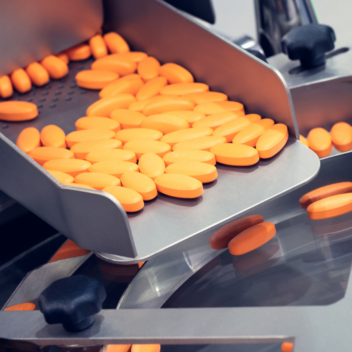





different types of pills

Supplements

Are you looking for something else?

tile image
Check Offer

Plant-origin compounds

tile image
Check Offer

Synthetic substances

tile image
Check Offer

Microbiological testing

tile image
Check Offer

Physicochemical testing

tile image
Check Offer

Allergens

tile image
Check Offer

Stability testing

Contact Form

* required fields

The administrator of personal data is J.S. Hamilton Poland Sp. z o.o. with headquarters in Gdynia, ul. Chwaszczyńska 180, 81-571 Gdynia. We have appointed a Data Protection Officer who can be contacted by letter or by e-mail: iodo@jsh.com.pl

News

Cosmetic Efficacy and Safety Evaluation: Clinical Studies and Instrumental Testing for Cosmetics

“Reduces redness,” “evens out skin tone,” “brightens discolorations” – such claims are frequently found on cosmetic products today. For consumers, they serve as a guide during product selection, whereas for cosmetic manufacturers, they represent firm marketing claims that must be supported by reliable scientific evidence. The modern beauty market no longer relies solely on catchy slogans; objective evaluation of cosmetic efficacy that …

See more

Summer in the Cosmetic Laboratory – Testing Cosmetic Performance in Summer Conditions and Regulatory Updates for the Industry

Summer is a particularly demanding season for cosmetic products. High temperatures, intense UV exposure, seawater and chlorinated water can all affect product performance and durability. At the same time, manufacturers must keep pace with evolving regulations governing ingredient safety and market compliance. In this article, we present the latest regulatory developments and laboratory testing methods …

See more

European Regulatory Framework and Professional Supplements Testing

Dietary supplements occupy a rapidly expanding segment of the European food market, driven by increasing consumer interest in preventive healthcare, nutrition, and wellness. In the European Union (EU), every dietary supplement is regulated not as a medicinal product, but as a food, which subjects them to a distinct legal and scientific framework. The primary legislative …

See more

Pesticide Residue Testing: New Limits for Imported Food Pose a Challenge for the Industry

Just a few years ago, many importers and processors treated pesticide residue testing primarily as an administrative formality. Today, the market reality is completely different. An unprecedented tightening of requirements is currently taking place on the Polish food market, drastically changing the rules of the game for entities importing raw materials from third countries. A …

See more

Nutritional Value Analysis in Dietary Supplement Testing: What Does It Deliver to Manufacturers?

The information displayed on a dietary supplement product label is a binding commitment made by the manufacturer to the consumer. To ensure that the finished supplement truly reflects its declared composition and complies with international labeling requirements, rigorous laboratory verification is essential. Dietary supplement testing confirms the exact presence and quantitative concentration of essential nutrients, …

See more

Testing for Heavy Metals in Supplements: Why Trace Amounts Are a Real Threat? 

A dietary supplement may boast an innovative formula and excellent marketing, but its market success often depends on something not visible on the label: the purity of raw materials. Testing for heavy metals in dietary supplements is currently one of the most critical stages of quality control, protecting not only consumer health but also the manufacturer’s reputation.  Where Does …

See more

Changes to European Union Regulations on Pesticide Residues in 2026 – New MRLs, Withdrawals of Active Ingredients, Renewals, and Extensions of Approvals

The year 2026 represents another stage in the intensification of the European Union’s public health protection policy, specifically regarding food safety and reducing the environmental impact of plant protection products. In recent years, there has been a systematic tightening of requirements concerning how pesticides are controlled. The implemented regulations include regular verification of active substances, …

See more

Instrumental and Application Testing in the Cosmetic Industry: How to Validate Marketing Claims and Efficacy? 

On cosmetic packaging today, it is easy to find bold promises: “deep skin hydration,” “anti-aging effects,” “tear-free formula,” or “immediate smoothing.” The issue is that to the consumer, all these statements sound equally credible, regardless of whether they are backed by rigorous research and development or merely a marketing interpretation of a single observation.  Yet, the …

See more

Collagen in Dietary Supplements – What Does Scientific Research Say, and Why Does Quality Matter?

Collagen remains one of the most widely used ingredients in the health and wellness industry. Growing interest in collagen’s effects on skin integrity, joint function, and bone density continues to drive the development of innovative formulations that enhance oral bioavailability. At the same time, increasing attention is being paid to raw material sourcing, strict regulatory …

See more

European Regulatory Framework and Professional Supplements Testing

Dietary supplements occupy a rapidly expanding segment of the European food market, driven by increasing consumer interest in preventive healthcare, nutrition, and wellness. In the European Union (EU), every dietary supplement is regulated not as a medicinal product, but as a food, which subjects them to a distinct legal and scientific framework. The primary legislative …

See more

Nutritional Value Analysis in Dietary Supplement Testing: What Does It Deliver to Manufacturers?

The information displayed on a dietary supplement product label is a binding commitment made by the manufacturer to the consumer. To ensure that the finished supplement truly reflects its declared composition and complies with international labeling requirements, rigorous laboratory verification is essential. Dietary supplement testing confirms the exact presence and quantitative concentration of essential nutrients, …

See more

Testing for Heavy Metals in Supplements: Why Trace Amounts Are a Real Threat? 

A dietary supplement may boast an innovative formula and excellent marketing, but its market success often depends on something not visible on the label: the purity of raw materials. Testing for heavy metals in dietary supplements is currently one of the most critical stages of quality control, protecting not only consumer health but also the manufacturer’s reputation.  Where Does …

See more

Collagen in Dietary Supplements – What Does Scientific Research Say, and Why Does Quality Matter?

Collagen remains one of the most widely used ingredients in the health and wellness industry. Growing interest in collagen’s effects on skin integrity, joint function, and bone density continues to drive the development of innovative formulations that enhance oral bioavailability. At the same time, increasing attention is being paid to raw material sourcing, strict regulatory …

See more

Dietary Supplement Composition Analysis: Why the Label Declaration is Only the Beginning

Not every dietary supplement performs as promised by the description on its packaging. While the dietary supplement market is growing rapidly, public awareness of what truly lies behind terms like “plant extract” or “high dose of vitamins” often lags behind. For a product to be both safe and effective, professional composition analysis is essential to …

See more

Listeria monocytogenes Testing in Ready-to-Eat Food and Supplements: Strict New EU Criteria from July 2026

The European food sector and dietary supplement manufacturers are facing one of the most stringent regulatory shifts in public health history. Starting July 2026, new EU rules will officially tighten the microbiological criteria for ready-to-eat food items placed on the market. This new commission regulation places the entire burden of proof on the food business …

See more

Trends in the Dietary Supplements Market in 2026 – Development Directions and the Role of Quality Testing

The dietary supplements market in 2026 continues to evolve rapidly, entering a new phase driven by technological innovation, growing consumer expectations, and global market dynamics. Supplementation is no longer generic – it is increasingly becoming a precise, data-driven approach to supporting health, backed by verified quality. This article outlines the key market trends shaping the …

See more

Stability Testing of Dietary Supplements: Assessment of Quality and Safety

The stability of dietary supplements is crucial to ensuring their quality and safety. Stability testing is a comprehensive process that allows the assessment of how storage conditions affect the composition of supplements and their shelf life before they reach the consumer. The Importance of Stability of Dietary Supplements Why is stability testing necessary? Stability testing …

See more

Determination of the TOTOX Index in Dietary Supplements – The Importance of the Oxidation Indicator in Assessing the Quality of Omega-3 Oils

The winter period is conducive to reviewing quality processes and verifying product stability. In the case of dietary supplements containing oils—particularly omega-3 fatty acids derived from fish and algae—their susceptibility to oxidation remains a key issue. One of the most comprehensive parameters for assessing this process is the TOTOX (Total Oxidation Value) index, which serves …

See more

Verify the Active Compounds Content in Your Dietary Supplements: An Essential Verification Program

In the competitive dietary supplements market, ensuring the quality and safety of your products is paramount. Precise verification of active compounds is not just a regulatory requirement but a cornerstone of consumer trust. This article explores the critical aspects of a dietary supplement verification program, highlighting the importance of accurate testing and compliance with industry …

See more

Assessment of Dietary Supplement Efficacy & Food Effects

In today’s market, the assessment of dietary supplements and food products is crucial for manufacturers aiming to meet consumer expectations and regulatory demands. With the number of dietary supplement options available, instrumental analysis provides a robust method to confirm the efficacy of these products and ensure they deliver on their promises. Importance of Dietary Supplement …

See more

Doping Testing in Nutritional Products and Dietary Supplements

Doping in sport is a problem that affects both amateur and professional athletes. In the context of dietary supplements and sports nutrition products, doping testing becomes crucial for protecting athletes’ health and maintaining fair competition. This article discusses doping-related aspects of supportive products, highlighting potential risks and the need for proper control. What Is Doping …

See more

Storage testing of dietary supplements – check how long your product retains its value in various climate zones

The stability of dietary supplements is one of the key elements of their quality. Consumers expect that the declared content of active ingredients will be maintained throughout the shelf life and that the product will be safe and comply with the specifications. To guarantee this, manufacturers use stability studies to assess how a supplement behaves …

See more

Professional verification of dietary supplement labels

In the dietary supplement industry, labels play a much greater role than just providing information. They are also a tool for communicating with consumers, an element that builds brand credibility, and – crucially – a legal document that must meet specific requirements. Incorrect labeling can lead to serious consequences: from the need to correct labels, …

See more

Microbiological safety of dietary supplements – what does a manufacturer need to know?

Dietary supplements are one of the fastest growing segments of the health product market. With their growing popularity, expectations regarding their safety are also growing, both among consumers and regulatory authorities. One of the key areas of control is microbiological safety, which affects not only the quality but also the health of people who use …

See more

Contact Form

* required fields

The administrator of personal data is J.S. Hamilton Poland Sp. z o.o. with headquarters in Gdynia, ul. Chwaszczyńska 180, 81-571 Gdynia. We have appointed a Data Protection Officer who can be contacted by letter or by e-mail: iodo@jsh.com.pl